County planners had scheduled a final infrastructure vote.
Commercial developers were already circling neighboring parcels.
A new appraisal placed my former acreage near three times my sale price.
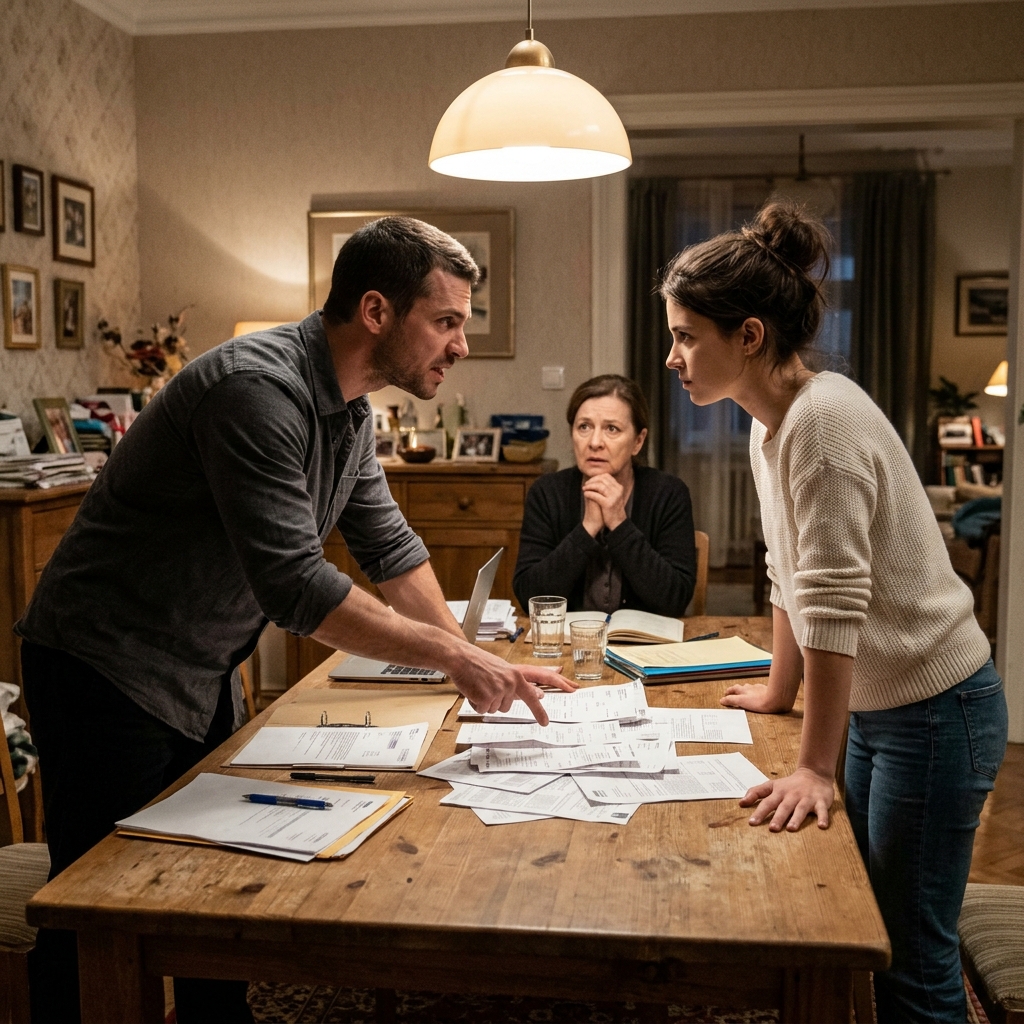
I sat at Margaret’s conference table and stared at the report.
Malcolm had bought some of those trees with money from repairing tractors after midnight.
His father had planted the oldest rows.
Julian had learned to ride a bicycle between them.
I had traded that ground for imported flowers and shuttle buses.
Shame arrived like nausea.
Margaret pushed a glass of water toward me.
“Stop blaming yourself.”
“I signed.”
“You signed using information supplied by people you had reason to trust.”
“I should have checked.”
“Yes.”
Her answer surprised me.
“You’re supposed to tell me it wasn’t my fault.”
“No.”
She folded her hands.
“You made a rushed decision.”
I appreciated her more for saying it.
“Victor may have exploited that decision.”
She tapped the appraisal.
“Those are different truths.”
I looked at her.
“What can we actually prove?”
“That is the useful question.”
She began with the broker.
My former broker had exchanged seventeen calls with Victor during the month before closing.
Phone records alone proved nothing improper.
Emails proved more.
A subpoena would eventually reveal the entire pattern.
We did not need one immediately.
Julian gave Margaret the screenshots from Marissa’s tablet.
He also provided messages from his own phone.
Those messages hurt worse than the appraisal.
For months, Marissa had coached him before conversations with me.
“Mention Malcolm before asking.”
“Tell her this is about family.”
“Don’t give her time to think.”
“Call instead of texting because she says no more easily in writing.”
I read each message once.
Then I stopped.
There are moments when more evidence teaches nothing new.
Julian sat across from me.
He looked terrible.
He had slept at a roadside hotel.
He had paid for it himself.
That fact should not have impressed me.
It did.
“Why did you send these?” I asked.
“Because you need them.”
“Not because you expect forgiveness?”
He shook his head.
“I want forgiveness.”
At least he was honest.
“But I don’t think I’m owed it.”
Margaret excused herself.
Julian and I remained alone.
Sunlight fell across the polished conference table.
For years, I had been terrified of conversations that might push him away.
Now distance felt medicinal.
“How much did you know?” I asked.
“About Victor buying the orchard?”
“About everything.”
He rubbed both palms together.
“I knew Marissa wanted you spending more than you planned.”
“That is obvious.”
“I knew she thought you could afford it.”
“Could I?”
His face tightened.
“No.”
“Did you know that?”
“Yes.”
I nodded.
“Continue.”
“I knew she wanted me to ask for a house deposit after the wedding.”
“How much?”
He stared at me.
“Seventy-five thousand.”
The number almost made me laugh.
“You have forty-two thousand dollars in debt.”
“Yes.”
“And planned to ask me for seventy-five thousand.”
“Yes.”
“For a house.”
“Yes.”
“Did the house have room for me?”
His eyes flickered.
The question had been instinctive.
His reaction made it important.
“Julian.”
He looked away.
“Marissa talked about converting the downstairs office.”
“For me?”
He nodded.
My stomach tightened.
“Why?”
“So you could eventually stay with us.”
“Eventually.”
He whispered, “When you got older.”
I leaned back.
“How thoughtful.”
“Mom.”
“No, explain the complete plan.”
“There wasn’t a complete plan.”
“Marissa always has a complete plan.”
His silence answered me.
I waited.
“She thought selling your house later would make sense.”
The room became very still.
“My house.”
“She said maintaining both properties would be stupid.”
“Both?”
“Our future house and yours.”
I almost admired her arithmetic.
She had planned my later years before finishing the reception appetizers.
“What happened to the remaining orchard?”
Julian closed his eyes.
“She said we could sell that too.”
“Of course.”
“I told her no.”
“Did that stop the conversation?”
“No.”
“What did you tell her?”
“That Dad wanted it kept.”
I laughed once.
Malcolm remained useful even while defending himself from the grave.
Julian flinched.
“I know how it sounds.”
“It sounds accurate.”
“I wasn’t planning to take your property.”
“You were planning to ask.”
“That isn’t the same.”
“No.”
I nodded.
“Because asking allowed you to call my surrender voluntary.”
He looked like I had slapped him.
Good.
Sometimes truth should sting.
“Did you love her?” I asked.
His answer came immediately.
“Yes.”
I believed him.
Love does not certify character.
It only explains endurance.
“What did you love?”
He thought for a long time.
“She made everything feel possible.”
I understood that too.
Marissa had turned extravagance into optimism.
Every limit became negativity.
Every concern became sabotage.
Every sacrifice became proof that we believed in their future.
“Then learn this,” I said.
“Someone making everything feel possible is dangerous when somebody else always pays.”