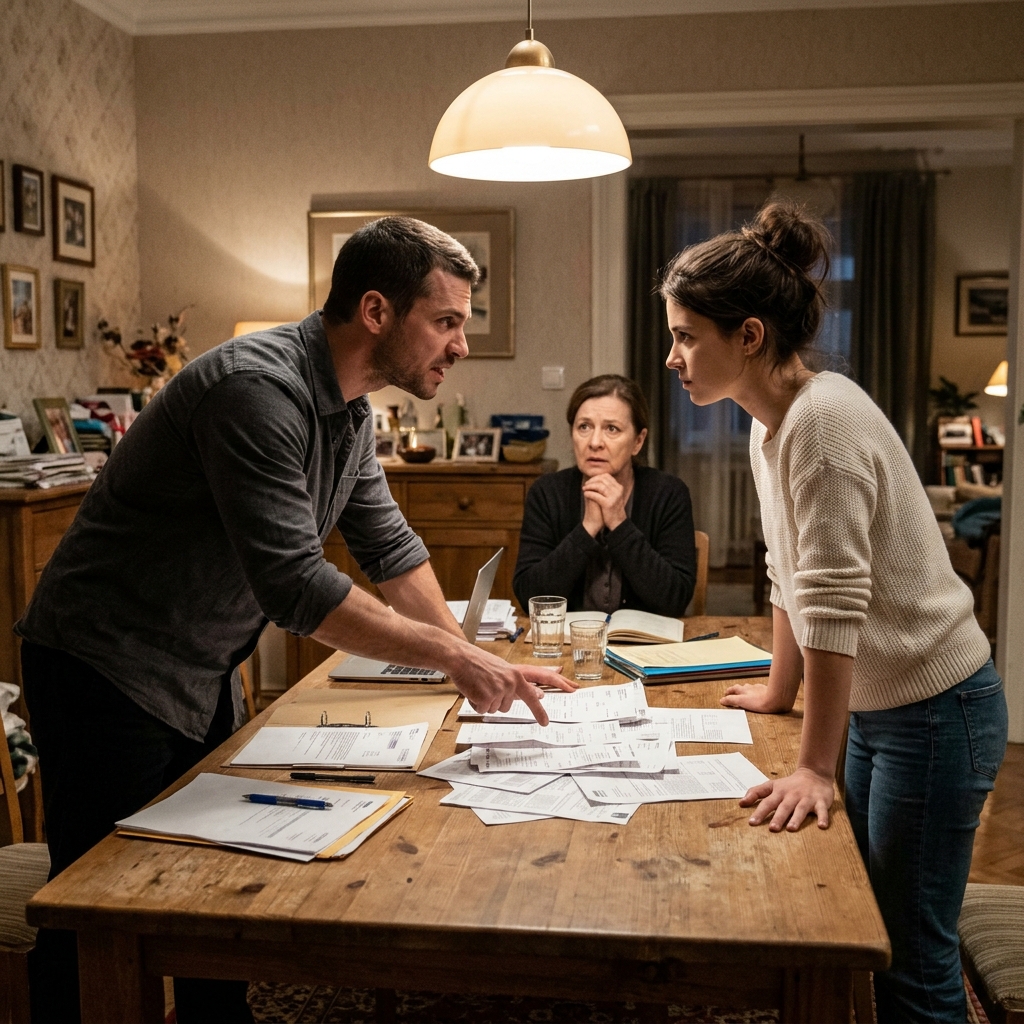
That was why I answered.
“I didn’t know it was you,” he said.
“I know.”
“I should have.”
“Yes.”
He exhaled slowly.
“Dad kept saying the family account was something Grandpa arranged years ago. None of us checked.”
“You were receiving $4,800 a month.”
“I know.”
“And you never asked where it came from?”
His silence was answer enough.
Then he said something unexpected.
“I think we liked not knowing.”
That sentence stayed with me.
Not knowing allowed them to accept the help without gratitude.
Not knowing allowed Dad to imagine himself still providing.
Not knowing allowed Erica to call me irresponsible while living partly on money I earned.
Two months later, Mom wrote me a letter.
Not an email.
Not a text.
A letter.
She apologized for what she had said in front of Lila.
She admitted that after my divorce, she had decided being a single mother meant I had somehow failed at the life she imagined for me. Every later success passed through that assumption and came out smaller.
“I made your marital status more important than your character,” she wrote.
I read that sentence twice.
Then I called her.
Repair did not happen quickly.
I did not restart the old transfers.
That mattered.
Apology should not be confused with restored financial access.
Dad struggled the longest.
Four months after Christmas, he flew to California alone.
He stood on my deck overlooking the ocean and stared at the house.
“You own this?”
“Yes.”
“No mortgage?”
“No.”
He looked embarrassed.
Then he asked about HarborGrid.
For the first time, he listened while I explained what I had built.
Not the valuation.
The work.
The first three employees.
The years I took customer calls after midnight.
The payroll week when I paid everyone except myself.
The morning our largest client signed.
Eventually Dad said, “I thought you were barely getting by.”
“You never asked.”
His eyes dropped.
“No.”
Then came the apology I had needed more than the others.
“I kept treating Erica and Nolan like adults with complicated lives.”
He swallowed.
“And I treated you like a mistake I was still waiting to see corrected.”
I did not rescue him from the discomfort.
He needed to finish the sentence.
“I was wrong.”
A year after that Christmas, we had dinner together again.
Not at my parents’ house.
At mine.
Lila hung paper snowflakes across the windows. Nolan brought dessert. Erica arrived early and helped cook.
Nobody discussed monthly transfers.
Dad had downsized the house and adjusted to his real retirement income. Erica handled her own rent. Nolan’s company was smaller but financially healthier because he finally knew exactly what it cost to operate.
I eventually helped my parents with one thing: long-term medical planning.
This time, it was written clearly.
Specific amount.
Konkrét cél.
Nincs láthatatlan fiók.
Nem feltételezték, hogy a szerelem korlátlan hozzáférést jelent.
Vacsora után apa mellettem állt a teraszon.
“Azt hittem, ha kidoblak, az alázatot tanít neked,” mondta.
Az üvegen át néztem, ahogy Lila nevet a nagynénjével.
“Tényleg tanított valamit.”
“Mi?”
“Hogy az embereknek segíteni nem ugyanaz, mint megtanítani nekik, hogy örökké számíthatnak rád.”
Bólintott.
Azon a karácsonykor a családom megtudta, hogy egy 68 millió dolláros cég részének tulajdonosa.
De ez sosem volt a fontos felfedezés.
A legfontosabb kisebb volt.
A pénz kényelmesen tarthatja az embereket.
Nem tudja rávenni őket, hogy tiszteljék azt, aki adja.
És néha a legegészségesebb ajándék, amit egy családnak adhatsz, az a pillanat, amikor az automatikus fizetés végre megszűnik.